
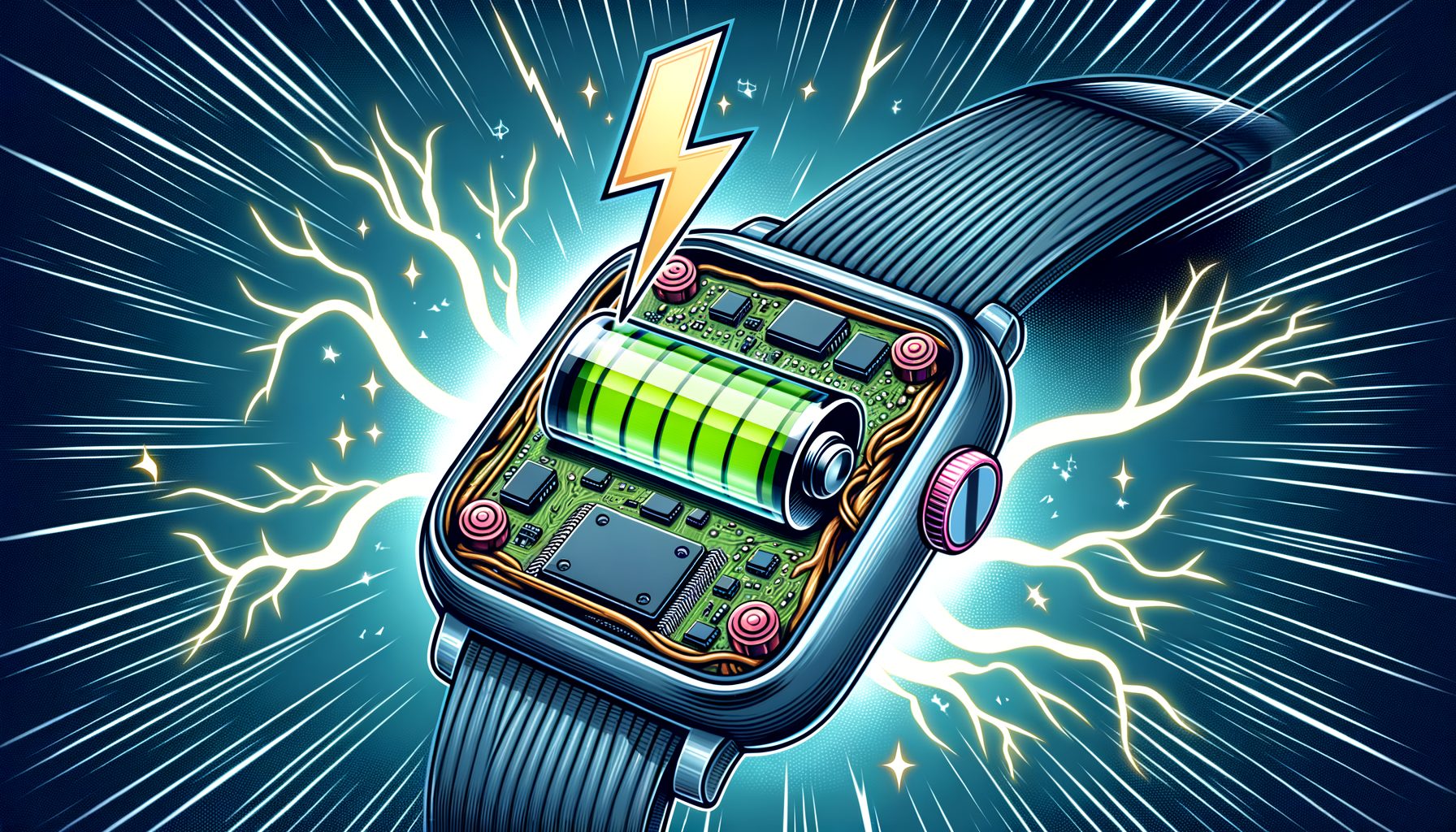
Health insights, gentle nudges, and hands-free convenience—wearables promise a lot, yet they too often die right when you need them. The good news? Low-power chipsets are quietly reshaping what’s possible, stretching battery life without stripping out features. In this article, we unpack how these chipsets work, what to watch for in the specs, and how makers and buyers can squeeze out more hours (and even days) between charges. Curious how smartwatches and fitness bands keep adding GPS, continuous heart rate, and on-device AI while lasting longer? Read on.
The problem: where your wearable’s energy actually goes—and how low-power chipsets fix it
Wearables don’t falter mainly because batteries are tiny; they struggle because every subsystem—display, radios, sensors, and the main processor—fights for milliwatts. Displays—especially bright AMOLED panels—spike power during interactions. Radios such as Bluetooth Low Energy (BLE), Wi‑Fi, LTE, GPS/GNSS, and NFC prove surprisingly hungry when active, particularly during connections, scans, and satellite lock. Sensors (PPG heart rate, SpO₂, accelerometer/gyro, skin temperature) add continuous sampling and digital signal processing. Finally, the system-on-chip (SoC) wakes frequently for notifications, animations, and ML tasks. The result: death by a thousand wake-ups.
Engineers tackle the problem at the silicon level with complementary strategies. First, advanced process nodes (e.g., 4–5 nm for high-end, 22 nm tuned for ultra-low leakage) curb dynamic and leakage power. Second, work is split across power “islands,” letting entire blocks turn off when idle. Third, tiny always-on co-processors handle basics—alarms, step counting, voice trigger—so the big CPU stays asleep. Fourth, hardware accelerators take on common workloads (audio keyword spotting, heart rate FFT, sensor fusion), trading millijoules for microjoules per task.
On the software side, low-power chipsets shine when paired with smart scheduling. Real-time operating systems (RTOS) or optimized wearOS/watchOS layers coalesce wake-ups, duty-cycle radios, and cache sensor reads. Dynamic voltage and frequency scaling (DVFS) dials the chip just fast enough for the job, then drops into deep sleep measured in microamps. Taken together, the approach explains why modern devices can stream music, run GPS, and continuously track health yet outlast older models with similar batteries.
In practice, fewer compromises are required. Always-on display (AOD) can run in a low-refresh, low-brightness mode driven by an efficient co-processor. Then this: 24/7 heart rate trends can continue while the main CPU naps. With on-device AI accelerators, features like fall detection, gesture control, and voice commands happen locally—often faster and at lower energy than cloud offload. In short, low-power chipsets turn “charge every night” into “charge when convenient.”
What actually makes a chipset low power: architecture, metrics, and trade-offs
“Low power” isn’t one spec; it’s a stack of design choices that show up in data sheets and real-world behavior. Here are the pillars to understand:
– Process technology and leakage control: Smaller nodes (4–5 nm) reduce dynamic power per operation, while specialized techniques (near-threshold or subthreshold operation, body biasing) minimize leakage in sleep. MCU-class ultra-low-power SoCs often use 22 nm designed for minimal leakage, which is crucial for long standby.
– Power domains and sleep states: Look for multiple power islands with independent clocks and regulators. Best-in-class wearables keep an “always-on” island (RTC, PMIC, sensor hub) alive at microamp currents while shutting off high-performance cores. Targets you’ll see: deep-sleep currents under 10 µA for MCU-class chips, or tens to low hundreds of µA for smartwatch-class SoCs with co-processors.
– Heterogeneous compute: Mixing big cores (apps/UI), efficiency cores (background tasks), and tiny always-on DSP/MCU cores right-sizes compute. Many platforms add fixed-function blocks for audio (beamforming, keyword spotting), vision (basic object detection), or health (PPG filtering), slashing energy per inference.
– Radio efficiency: BLE 5.x reduces transmit power per bit and supports longer range at similar energy. Efficient GNSS (multi-band with low-power acquisition) and smart firmware (hot-start, duty-cycled sampling) trim worst-case spikes. Antenna design and firmware scheduling matter as much as the chip here.
– Memory and storage access: SRAM and flash reads aren’t free. Low-power chipsets cache intelligently and batch writes. Compression and quantization (e.g., 8-bit ML models) reduce memory bandwidth and energy.
– Measurable metrics to watch: Active power (mW) at a known workload; deep sleep current (µA); energy per operation (e.g., µJ per sensor fusion cycle); radio energy per packet; and “system” metrics like hours of GNSS logging, hours of always-on display, or days of 24/7 HR tracking. Vendor claims such as “up to 50% lower power than previous gen” give directional guidance but should be validated within your use case.
Trade-offs are real. The most advanced 4–5 nm SoCs excel with rich UIs and apps but may idle higher than minimalist MCU-based platforms. Conversely, MCU-class chips can deliver multi-week endurance with simpler graphics and leaner app ecosystems. The sweet spot depends on priorities: a smartwatch that runs third-party apps, or a fitness band that lasts three weeks? Low-power chipset design enables both—via different paths.
Real-world chipsets and what their claims mean for your battery life
Well, here it is: a snapshot of prominent platforms and what their low-power designs imply. Battery life is always device- and usage-dependent, but vendor data and device announcements offer useful context.
| Chipset | Process node | Key low-power feature | Example devices | Typical advertised battery life | Vendor claim |
|---|---|---|---|---|---|
| Qualcomm Snapdragon W5+ Gen 1 | 4 nm main + 22 nm co-processor | Always-on co-processor for sensors/AOD; multiple power islands | Oppo Watch 3 series, TicWatch Pro 5 | ~2–5 days depending on settings | Up to 50% lower power vs previous gen |
| Apple S9 SiP | Advanced 5 nm class | Neural Engine for on-device ML; efficient display pipeline | Apple Watch Series 9 | ~18 hours; up to 36 hours in Low Power Mode | Improved efficiency over S8; faster on-device tasks |
| Samsung Exynos W930 | 5 nm | Higher clock with optimized power; advanced PMIC integration | Galaxy Watch6 series | Up to ~40 hours (varies by model/AOD) | Performance uplift with efficient power use |
| Ambiq Apollo4 family | 22 nm with subthreshold design | Ultra-low sleep currents; sensor hub; graphics controller for low-power UI | Various fitness bands and kids’ watches | Often 7–21 days for simple wearables | Industry-leading microamp sleep currents |
| Nordic nRF52/nRF53/nRF54 Series | Optimized low-power nodes | BLE SoCs with ultra-low RX/TX current; flexible power modes | Trackers, hearables, minimalist wearables | Days to weeks on small cells | Very low radio energy per packet |
How to read the table as a buyer or builder: Smartwatch-grade SoCs (Qualcomm, Apple, Samsung) prioritize rich apps, bright screens, and fast UI responsiveness. Their low-power advances show up as “same features, longer use” and power-friendly modes like AOD that barely dent battery. MCU-class and BLE-centric platforms (Ambiq, Nordic) win on endurance: step tracking, HR monitoring, and notifications can run for weeks, with simpler graphics.
What’s interesting too: co-processors and accelerators shift energy from the “big” CPU to efficient blocks. An always-on DSP can listen for a wake word at microwatts while the main CPU sleeps. Likewise, a low-power graphics controller can refresh a clock face without waking the app processor. These architectural choices explain why “more features” no longer automatically means “less battery.” Do confirm claims with independent reviews and your own usage (AOD on/off, GNSS workouts, cellular use), because radios and displays still dominate when active.
Practical ways to extend battery life—whether you’re a developer or a buyer
Low-power chipsets lay the foundation; real-world endurance is decided by how you use them. Here are concrete steps that consistently move the needle:
– For developers and product teams:
1) Instrument power early. Use a power analyzer to measure sleep current, radio bursts, and task spikes. Optimize for “time in deep sleep” above all else; a device sleeping at 8 µA for 95% of the day will beat a flashier active-mode optimization. 2) Exploit power islands. Offload step counting, alarms, and AOD refresh to always-on cores or display controllers. Verify the big CPU truly stays off. 3) Duty-cycle radios smartly. Batch notifications, increase BLE connection intervals, and schedule Wi‑Fi/LTE scans sparingly. For GNSS, use assisted-GPS and warm/hot starts; log at 1 Hz only when needed. 4) Optimize sensor pipelines. Downsample when possible, run adaptive sampling (e.g., high rate during workouts, low rate at rest), and use hardware accelerators for PPG filtering or ML inference. 5) Tune the display. Prefer dark/ambient modes, lower refresh, and shorter screen-on durations. Render static watch faces that can be refreshed by a low-power controller without waking the app CPU. 6) Shrink models. Quantize AI models (int8), prune parameters, or use tiny keyword spotters. Offload to on-chip accelerators to lower energy per inference. 7) Firmware hygiene. De-bounce timers, coalesce interrupts, avoid chatty logging, and prevent rogue background tasks that keep clocks running.
– For buyers and everyday users:
1) Choose the right class. If you want third-party apps and bright animations, pick smartwatch-grade SoCs, then enable low-power modes for travel days. If you want “set and forget” endurance, consider fitness bands with ultra-low-power MCUs. 2) Use built-in low-power profiles. Toggle Low Power Mode or extended battery saver for trips; customize what stays active (AOD, Wi‑Fi, LTE). 3) Tame the display. Lower brightness, shorten screen timeout, and consider turning off AOD when you need multi-day runtime. 4) Smart GPS. For long hikes, record at sensible intervals and cache maps offline to minimize cellular bursts. 5) Health sampling. Keep 24/7 heart rate if you value trends, but reduce SpO₂ checks to nightly or on-demand. 6) Manage notifications. Prioritize essentials; fewer buzzes mean fewer wake-ups. 7) Update firmware. Vendors ship power optimizations routinely; staying current can add hours without changing habits.
The gains stack. Real-world tests often show double-digit improvements (20–40%) from radio duty-cycling plus display tuning alone. Add a low-power chipset with a capable co-processor, and weekend trips without a charger become realistic. For developers, the mantra is simple: measure, offload, and sleep. For users: pick the right platform, then let smart defaults do the work.
FAQ: quick answers to common questions
Q1: What is a “low-power chipset” in wearables? A: A system-on-chip built to minimize energy for common wearable tasks using advanced process nodes, multiple power domains, always-on co-processors, and hardware accelerators for sensors, radios, and AI.
Q2: Does a bigger battery beat a low-power chip? A: Bigger batteries help, but efficiency compounds every minute of the day. A low-power chipset can deliver the same features with longer runtime and a smaller, lighter device—often the better overall experience.
Q3: Will on-device AI drain my battery faster? A: Not necessarily. When AI runs on dedicated accelerators or always-on DSPs, it can be more energy-efficient than sending data to the cloud. The key is using the right hardware blocks and lightweight models.
Q4: Why does my battery life vary so much day to day? A: Radios, display time, and workouts drive variability. GNSS sessions, streaming music, and long bright-screen interactions can double or triple daily energy use compared to a quiet day.
Q5: Can software updates really improve battery life? A: Yes. Vendors routinely refine scheduling, radio behavior, and sensor handling. Updates that reduce wake-ups or improve co-processor offload can add hours or even days over a device’s lifetime.
Conclusion: the future of wearables is efficient—here’s how to benefit today
In this guide, we mapped the core tension—tiny batteries versus hungry features—and showed how low-power chipsets flip the equation. Through advanced process nodes, power islands, always-on co-processors, and specialized accelerators, modern SoCs lengthen battery life without dumbing down the experience. We compared leading platforms from Qualcomm, Apple, Samsung, Ambiq, and Nordic, translating vendor claims into practical expectations. Finally, we shared specific steps developers and users can take to convert silicon potential into real-world hours and days.
Now, it’s your turn to act. If you build wearables, audit power with a fine-tooth comb: measure sleep current, aggressively offload to always-on cores, shrink models, and schedule radios wisely. Choose chipsets with strong low-power roadmaps and the co-processors your use cases need. If you’re a buyer, match the device class to your lifestyle: smartwatch silicon for rich apps, MCU-class platforms for marathon endurance. Then turn on low-power profiles, manage the display, and let smart defaults extend runtime without constant micromanagement.
The era of “charge every night” is fading. With the right low-power chipset and a few smart habits, your wearable can sail through busy workdays, long workouts, and weekend trips—no outlet hunting required. Start by checking your device’s power settings or, if you’re shopping, scan the spec sheet for co-processors and low sleep currents. Small choices add up to big gains. Ready to see how many extra hours you can unlock this week? Your battery—and your future self on day two of a trip—will thank you.
Efficiency is freedom: the less energy your wearable wastes, the more life you get to live between charges. What’s the first feature you’ll optimize today—display, GPS, or notifications?
Sources and further reading:
– Qualcomm Snapdragon Wear platforms: https://www.qualcomm.com/products/mobile/snapdragon/wearables
– Apple Watch Series 9 battery information: https://www.apple.com/apple-watch-series-9/
– Samsung Exynos W930 overview: https://semiconductor.samsung.com/consumer-electronics/exynos-wearables/exynos-w930/
– Ambiq wearables solutions (Apollo4): https://ambiq.com/solutions/wearables/
– Nordic Semiconductor product overview: https://www.nordicsemi.com/Products
– Bluetooth Low Energy basics (Bluetooth SIG): https://www.bluetooth.com/bluetooth-resources/introducing-bluetooth-low-energy/